
| ROYAL NORWEGIAN AIR FORCE |
| KRALJEVSKA NORVEŠKA AVIJACIJA |
|
|
 |
 |
 |
 |
 |
 |
 |
 |
 |
 |
 |
 |
 |
 |
 |
 |
 |
 |
 |
 |
 |
| LINKS LINKOVI |
 |
 |
| OFFICIAL WEBSITE |
| Dimensions: |
| height x lenght |
| Veličina: |
| visina x širina |
|
Kraljevska norveška avijacija (Luftforsvaret) je ustanovljena kao poseban rod norveške vojske 10. 11. 1944 godine. U mirnodopsko vrijeme ima otprilike 1.430 pripadnika (oficira, podoficira i civila). Uz njih je tu još i 600 vojnika na odsluženju vojnog roka. U slučaju mobilizacije, snage narastaju na 5.500 pripadnika. Kraljevsku norvešku avijaciju čini sedam avio baza (Andøya, Bardufoss, Bodø, Gardermoen, Rygge, Sola i Ørland) i tri trening centra (Kjevik u Kristiansandu, Persaunet u Trondheimu i KNM HH/Madlaleiren (Stavanger)). Organizirani su u deset odjela (krila), koje su podijeljene u dva kontrolna centra, devet letačkih eskadrila i dvije protivavionske jedinice. |
||
|
CAP BADGES OZNAKE ZA KAPE |
||
 |
 |
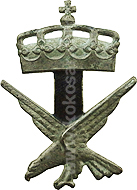 |
| AIR FORCE SIDE CAP BADGE | BERET BADGE FOR ADA UNITS -1983 | OLD AIR FORCE SIDE CAP BADGE |
| Avijacija, oznaka za "titovku" | Značka za beretku PA jedinica - 1983 | Avijacija, stara oznaka za "titovku" |
| Dimensions: 31 x 30 mm | Dimensions: 46 x 41 mm | |
 |
 |
 |
| OFFICER | NCO | AIR FORCE FIELD CAP |
| Oficir | Podoficir | Platnena oznaka za kapu avijacije |
|
The Royal Norwegian Air Force (RNoAF) (Luftforsvaret) is the Air Force of Norway. It was established as a separate arm of the Norwegian armed forces on 10 November 1944. The RNoAF's peacetime establishment is approximately 1,430 employees (officers, enlisted staff and civilians). 600 personnel also serve their draft period in the RNoAF. After mobilization the RNoAF would consist of approximately 5,500 personnel. |
||
|
The infrastructure of the RNoAF includes seven airbases (at Andøya, Bardufoss, Bodø, Gardermoen, Rygge, Sola and Ørland), two control and reporting centres (at Sørreisa and Mågero) and three training centres (at Kjevik in Kristiansand and Persaunet in Trondheim) and at KNM HH/Madlaleiren (Stavanger). The RNoAF is organized in ten Air Wings. These are divided into a total of two Control and Reporting Centres, nine flying squadrons as well as two anti aircraft units. |
||
|
AIR FORCE WINGS AVIJACIJSKE PRSNE OZNAKE "KRILA" |
||
 |
 |
 |
| Maskinistving | Sistemoperatørving | |
| Dimensions: 27 mm x 55 mm | Dimensions: 53 mm x 90 mm | Dimensions: 30 mm x 70 mm |
|
AIR FORCE SCHOOLS AVIJACIJSKE ŠKOLE |
||
|
Školske oznake prije 1957 godine su nošene na lijevom rukavu, 5 cm ispod ramenog šava. Oznake su vezene svjetloplavim pamučnim koncem na avijacijsko plavom pamuku ili na tamnoplavoj čoji. Oznake instruktora i pitomaca su uvedene od 1957 do 1959, a ukinute 01. 08. 1962. Oznaka za FVAS je nošena i u LBAS Stavern (Avijacijska oficirska i administrativna škola). Oznaka za rame Više avijacijske škole su nošene na jaknama i bluzama službene uniforme, prišiven 70 mm od gornjeg ruba ramena. |
||
 |
 |
|
| Flyvåpnets Tekniske Skole, Kjevik | Flyvåpnets Administrasjons Skoler Oslo | |
|
School insignias before 1957 were worn on left sleeve, 5 cm below the shoulder seam, measured to the top of the badge. The badges were embroidered in light blue cotton on AF-blue cotton or dark blue felt. Arm insignias for instructors and Cadets with the Schools of the AF are found embroidered in cotton on fabric, whole woven and embroidered in cotton on felt. They were introduced 1957 – 1959, discontinued August 1st 1962. The patch for FVAS has also been worn by LBAS Stavern (Officer’s and Administration School of the Air Force). The shoulder insignia for Armed Forces High School was worn by students at this School ca 1960. School insignia after 1962 was worn with the service jacket and the blouse. The patch was mounted on left arm, with the upper edge of the patch 70 mm below the shoulder seam. |
||
|
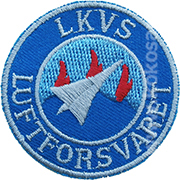
Oznaka Avijacijske škole su odobrene 1970. Prva oznaka sa tvrđavicom (blockhouse), krunom i mottom LSS je odobrena 1976-te i napravljene su 4 oznake sa različitim natpisima: LSS (Aviacijska škola Stavern), LOSK (Oficirska škola avijacije), LVSS (Protivavionska škola gađanja) i LBSK (Avijacijska škola za oficire i podoficire). Ove su oznake zamijenjene oznakom Luftforsvarets Skoler Stavern koja je odobrena 1981. Godine i to bez krune. Istovremeno su odobrene i oznake za LTS i LKVS. 1996 godine su uvedne i dvije nove oznake: Magero kontrolna stanica, promjera 70 mm, dok su sve ostale 50 mm te oznake za Vatrogasne i spasilačke službe, koja je nošena na bejzbol kapi. |
||
 |
 |
 |
| AF SCHOOL STAVERN | TECHNICAL SCHOOL CENTRE KJEVIK | |
| Luftforsvarets Skoler Stavern | Kontroll og Varslingsskole (LKVS) | Tekniske Skolesenter Kjevik |
| Avijacijska škola Stavern | Tehnički školski centar Kjevik | |
 |
||
| FLYING SCHOOL VÆRNES | ||
| Flygeskolen Værnes | ||
| Pilotska škola Væarnes | ||
|
The patch for Aviation School was approved 1970. The first insignia with blockhouse, crown and motto for LSS was approved in 1976, and 4 patches with different abbreviation were made: LSS (Air Force School Stavern), LOSK (Officer’s School of the AF), LVSS (AA Shooting School) and LBSK (AF School for Officer’s and NCO’s). These patches were replaced by the insignia for Luftforsvarets Skoler Stavern in 1981, and approved for wear on the uniform, without crown and motto. Simultaneously the patches for LTS and LKVS were approved. In 1996, two new insignia appeared. The patch for Mågero Control and Warning Station, which had a diameter of 70 mm, while the others are 50 mm, and the patch for Fire and Rescue Service, which was worn in the front of the baseball cap. |
||
|
AIR FORCE SERVICES AVIJACIJSKE SLUŽBE |
||
|
OFFICERS AND NCO'S OFICIRI I PODOFICIRI |
||
|
Oznake grana i službi se nose na desnoj strani službene uniforme iznad džepa. Izrađene su od metala ili vezene na platnu. Vezene oznake imaju dvije verzije, svečanu, vezenu žicom i „običnu“ vezenu bijelim koncem na crnoj podlozi. Prsne oznake se razlikuju i izgledom. Profesionalni vojnici (oficiri i podoficiri) imaju oznaku grane ili službe „položenu“ na vijenac od lišća, dok vojnici imaju samo znak okružen vijencem od lišća. |
||
 |
 |
 |
| ElektroniskTjenste | ElektroniskTjenste | |
| Dimensions: 36 x 50 mm | Dimensions: 37 mm x 50 mm | |
 |
 |
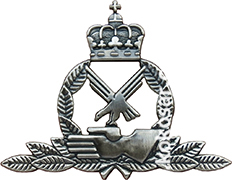 |
| Flyteknisk Tjenste | ||
| Dimensions: 37 mm x 50 mm | Dimensions: 39 mm x 50 mm | |
 |
 |
 |
| Luftverntjeneste | Luftverntjeneste | Luftverntjeneste |
 |
 |
 |
| Operasjonstjeneste | Operasjonstjeneste | |
|
PROFESSIONAL SOLDIERS PROFESIONALNI VOJNICI |
||
 |
 |
 |
| Operasjonstjeneste | Flyteknisk Tjenste | Forvaltningstjeneste |
| Dimensions: 38 mm x 30 mm | Dimensions: 38 mm x 28 mm | Dimensions: 38 mm x 24 mm |
 |
 |
 |
| Operasjonstjeneste | Flyteknisk Tjenste | Forvaltningstjeneste |
 |
 |
|
| Elektonisk Tjenste | Luftverntjeneste | |
| Dimensions: 38 mm x 24 mm | Dimensions: 37 mm x 26 mm | |
|
OTHER INSIGNIAS OSTALE OZNAKE |
||
 |
 |
|
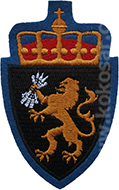
| AIR DEFENCE ARTILLERY | ARMED FORCES LOGISTIC ORGANISATION | |
|
Protuavionska odbrana |
Logistika oružanih snaga | |
| Luftvernartilleriet | Forsvarets Logistikkorganisasjon | |
|
IRIS AIR-TO-AIR MISSILE IRIS ZRAK-ZRAK RAKETA |
||
|
Iris-T „infracrvena“ zrak-zrak raketa (Infra Red Imaging System Tail/Thrust Vector-Controlled) je program razvoja i izrade rakete krtakog dometa pod njemačkim vodstvom. 1995. godine Njemačka je najavila razvojni program u suradnji sa Grčkom, Italijom, Norveškom, Švedskom i Kanadom. Kasnije je Kanada izašla iz programa, dok se 2003. godine pridružuje Španjolska. Njemačke avio-snage su prve rakete dobile 05. 12. 2005. „Dioba“ izrade rakete u postocima iznosi: Njemačka 46%, Italija 19%, Švedska 18%, Grčka 13% i 4% podjeljeno između Norveške i Kanade. |
||
 |
||
|
The IRIS-T (Infra Red Imaging System Tail/Thrust Vector-Controlled) is a Geramn-led program to develop a short-range infrared homing air-to-air missile. In 1995, Germany announced the IRIS-T development program, in collaboration with Greece, Italy, Norway, Sweden and Canada. Canada later dropped out, while in 2003 Spain joined as a partner for procurement. The German Air Force took first delivery of the missile on 5 December 2005. Workshare arrangements for IRIS-T development are: Germany 46%, Italy 19%, Sweden 18%, Greece 13% and 4% split between Canada and Norway. |
||
| Øivind Richard Makilla, 75 år med avdelingsmerker og gradtegn på uniform,printed in 2016 | ||
| Øivind Richard Makilla, Avdelingsmerker og gradtegn på uniform i Det norske forsvar 1940-1997, printed in 1997 | ||
ON TOP
 NA VRH
 |
||