
| POLICE FORCES of NORTHEN IRELAND |
| POLICIJSKE SNAGE SJEVERNE IRSKE |
| Seirbhís Póilíneachta Thuaisceart Éireann |
|
Polis Service o Norlin Airlan |


| POLICE SERVICE of NORTHERN IRELAND POLICIJSKA SLUŽBA SJEVERNE IRSKE | ||
|
Policijska služba Sjeverne Irske (PSNI; irski: Seirbhís Póilíneachta Thuaisceart Éireann; ulstersko-škotski: Polis Service o Norlin Airlan) je policija koja služi Sjevernoj Irskoj. Nasljednik je Kraljevske policije Ulstera (RUC) nakon što je reformirana i preimenovana 2001. na preporuku Pattenova izvještaja. |
||
|
The Police Service of Northern Ireland (PSNI; Irish: Seirbhís Póilíneachta Thuaisceart Éireann; Ulster-Scots: Polis Service o Norlin Airlan) is the police force that serves Northern Ireland. It is the successor to the Royal Ulster Constabulary (RUC) after it was reformed and renamed in 2001 on the recommendation of the Patten Report. |
||
 |
||
|
Policijska služba trenutačno ima oko 6900 policajaca i 2600 službenika, a vođenje i kontrola službe povjerena je glavnom policajcu (Chief Constable), kojemu pomažu zamjenik glavnog policajca, glavni operativni službenik i izvršni tim službe. PSNI je jedina rutinski naoružana služba u Ujedinjenom Kraljevstvu s jedinstvenim dodatnim izazovom rada policije u kontekstu 'značajne' terorističke prijetnje. Glavni policajac Sjeverne Irske treći je najplaćeniji policijski službenik u UK (nakon komesara i zamjenika komesara metropolitanske policije). Policijsko područje podijeljeno je na osam okruga, a svaki je na čelu s glavnim nadzornikom. Okruzi su podijeljeni na područja, kojima zapovijeda glavni inspektor; oni su pak podijeljeni u sektore kojima zapovijedaju inspektori. Posljednjih godina, prema novim strukturnim reformama, neki glavni inspektori zapovijedaju sa više od jednog područja. |
||
|
The Police Service currently has around 6,900 police officers and 2,600 police staff and the direction and control of the service is vested in the Chief Constable, who is assisted by a Deputy Chief Constable, Chief Operating Officer and Service Executive Team. PSNI is the only routinely armed service in the United Kingdom with the unique additional challenge of policing in the context of a ‘substantial’ terrorist threat. The senior officer in charge of the PSNI is its chief constable. The Chief Constable of Northern Ireland is the third-highest paid police officer in the UK (after the Commissioner and Deputy Commissioner of the Metropolitan Police). The police area is divided into eight districts, each headed by a chief superintendent. Districts are divided into areas, commanded by a chief inspector; these in turn are divided into sectors, commanded by inspectors. In recent years, under new structural reforms, some chief inspectors command more than one area. |
||
|
ROYAL ULSTER CONSTABULARY KRALJEVSKI ALSTERSKI POZORNICI |
||
|
Kraljevska policija Ulstera (Royal Ulster Constabulary, RUC) bila je policija u Sjevernoj Irskoj od 1922. do 2001. Osnovana je 01. 06. 1922. kao nasljednica Kraljevske irske policije (Royal Irish Constabulary, RIC) nakon podjele Irske. Na svom vrhuncu snage su imale oko 8500 policajaca, s daljnjih 4500 koji su bili rezervni pripadnici RUC-a. |
||
|
RUC je nadzirao Sjevernu Irsku od Irskog rata za nezavisnost do prijelaza u 21. stoljeće i igrao je važnu ulogu u "Nevoljama" (the Troubles) između 1960-ih i 1990-ih. Zbog prijetnje od Privremene irske republikanske armije (Provisional Irish Republican Army, IRA), koja je RUC smatrala provoditeljima britanske vladavine, snage su bile teško naoružane i militarizirane. Policajci su rutinski nosili puškomitraljeze i jurišne puške, putovali u oklopnim vozilima i bili smješteni u jako utvrđenim policijskim stanicama. Bila je to prva policija koja je koristila gumene i plastične metke za suzbijanje nereda. |
||
 |
 |
|
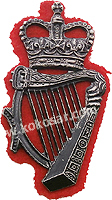
| CAP BADGE | CAP BADGE | |
| Oznaka za kape | Oznaka za kape | |
|
The Royal Ulster Constabulary (RUC) was the police force in Northern Ireland from 1922 to 2001. It was founded on 1 June 1922 as a successor to the Royal Irish Constabulary (RIC) following the partition of Ireland. At its peak the force had around 8,500 officers, with a further 4,500 who were members of the RUC Reserve. |
||
|
The RUC policed Northern Ireland from the aftermath of the Irish War of Independence until after the turn of the 21st century, and played a major role in the Troubles between the 1960s and the 1990s. Due to the threat from the Provisional Irish Republican Army (IRA), who saw the RUC as enforcing British rule, the force was heavily armed and militarized. Officers routinely carried submachine guns and assault rifles, travelled in armored vehicles, and were based in heavily-fortified police stations. It was the first police force to use rubber and plastic bullets for riot control. |
||
 |
 |
|
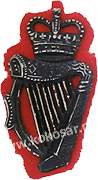
| COLLAR BADGE - left collar | ||
| Oznaka za lijevi rever | ||
ON TOP
 NA VRH
 |
||