
| ROYAL AIR FORCE |
| KRALJEVSKE ZRAČNE SNAGE |
|
|



|
Kraljevsko ratno zrakoplovstvo (The Royal Air Force RAF) su zračna grana britanskih oružanih snaga. Formirani su krajem Prvog svjetskog rata (01.04.1918.) i smatraju se najstarijim, nezavisnim zračnim snagama u svijetu. Nakon pobjede nad Centralnim silama 1918. godine iz rata izlaze kao najveće zrakoplovstvo toga doba. Od svojeg osnivanja RAF je igrao značajnu ulogu u britanskoj ratnoj historiji, pogotovo u Drugom svjetskom ratu, sa svojim najznačajnim bitkama, čuvenom „Bitkom za Britaniju“. |
||
 |
 |
|
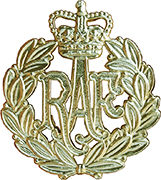
| OFFICERS BADGE | SOLDIERS CAP BADGE | |
| Oficirski znak za šapku | Oznaka za šapku | |
|
The Royal Air Force (RAF) is the aerial warfare service branch of the British Armed Forces. Formed toward the end of the First World War on 1 April 1918, it is the oldest independent air force in the world. Following victory over the Central Powers in 1918 the RAF emerged – at the time – the largest air force in the world. Since its formation, the RAF has taken a significant role in British military history, in particular, playing a large part in the Second World War where it fought its most famous campaign, the Battle of Britain. |
||
 |
 |
 |
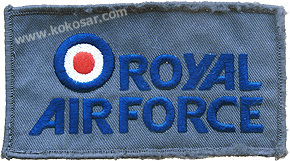
| RIGHT SLEEVE No1 DRESS UNIF. | BREAST PATCH | BREAST PATCH |
| Oznaka za desni rukav | Prsna oznaka | Prsna oznaka |
|
TACTICAL COMMUNICATIONS WING ESKADRILA (KRILO) TAKTIČKIH KOMUNIKACIJA |
||
|
Krilo za taktičke komunikacije (Tactical Communications Wing TCW) omogućava komunikacije raspoređenim jedinicama RAF-a. No 1, 2, 3 i 4 Field Communications (FC) Sqns – rade preko postavljenih mreža i informacijskih sustava u nizu postavki i lokacija. 5 Sqn pruža podršku FC Sqns-u, kroz kalibraciju i testiranje opreme. Korijeni TCW-a mogu se pratiti unazad do 1962. godine, i formiranja 38 Group Support Unit, bazirane na RAF Odiham. Tada se brzo shvatilo da komunikacije igraju veliku ulogu u potpornim operacijama. Godine 1965. u RAF-u Tangmere osnovana je Jedinica za taktičke veze br. 50, a kako je rasla, preimenovana je 1967. u Krilo za taktičke veze 38 grupe, a zatim ponovno 1969. u svoj sadašnji naziv, Krilo za taktičke komunikacije. |
||
|
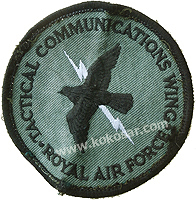
Moto TCW-a je "Ubique Loquimur" što u prijevodu znači "Govorimo posvuda" što je preuzeto iz značke Krila taktičkih komunikacija 38. Grupe (38 Group Tactical Communications Wing). Do spajanja s 90 jedinicom veze 2006., pripadnike TCW-a moglo se razlikovati po oba lista s činovima, izvezenim slovima 'TCW' i znački Krila (Wing) (golub u stijeni s munjom). Nakon spajanja, potonji je zamijenjen s 90 Signalnom jedinicom. |
||
 |
||
| TCW provides communications facilities to deployed units of the RAF. No 1, 2, 3 and 4 Field Communications (FC) Sqns - providing deployed networks and information systems in a range of settings and locations. 5 Sqn provides support to the FC Sqns, through calibration and testing of equipment. TCW's roots can be traced back to 1962, and the forming of 38 Group Support Unit, based at RAF Odiham. It was then quickly realised that communications played a large part in supporting operations. In 1965 No. 50 Tactical Signals Unit was formed at RAF Tangmere and as it grew in size was renamed, in 1967 to 38 Group Tactical Signals Wing then again in 1969 to its current name, Tactical Communications Wing. | ||
|
TCW's motto is "Ubique Loquimur" which translates to "We Speak Everywhere" which was taken from No. 38 Group Tactical Communications Wing badge. Until the amalgamation with 90 Signals Unit in 2006, TCW personnel could be distinguished by both their rank slides, embroidered with the letters 'TCW' and the Wing badge (the rock dove with lightning bolt). Upon amalgamation, the latter was replaced with that of 90 Signals Unit. |
||
|
RAF REGIMENT REGIMENTA RAF-a |
||
|
Kraljevska regimenta zračnih snaga (Royal Air Force Regiment) je dio zrakoplovstva i djeluju kao odbrambene snage na aerodromima. Obučeni su i opremljeni i za ABHO zaštitu i njihovi instruktori su zaduženi i za obuku svog ostalog RAF-ovog personala u osnovnoj zaštiti baza, ABHO zaštiti, prvoj pomoći, rukovanju oružjem itd. Unutar RAF-a (a i šire) su poznati kao Regimenta ('The Regiment'), „Gorski majmuni“ ('Rock Apes') ili samo „Kamenjari“ ('Rocks'). Pripadnici regimente su obučeni za uspješno sprečavanje neprijateljskih snaga na aerodrome, na smanjenje štete nakon uspješnog napada i za osiguranje uvjeta za nastavak rada aerodroma nakon napada. Pripadnici RAF regimenete koriste agresivne odbrambene taktike gdje aktivno traže moguće infiltratore u širkom reonu oko aerodroma. |
||
 |
 |
 |
| SLEEVE PATCH | SLEEVE PATCH | 2nd SQN RAF DROP ZONE FLASH |
| Oznaka za rukav | Oznaka za rukav | 2. skvadron RAF-a |
|
The Royal Air Force Regiment (RAF Regt) is part of the Royal Air Force and functions as a specialist airfield defence corps founded by Royal Warrant in 1942. The RAF Regiment is trained in CBRN (Chemical, Biological, Radiological and Nuclear) defence and equipped with advanced vehicles and detection measures. RAF Regiment instructors are responsible for training all Royal Air Force personnel in basic Force Protection, such as first aid, weapon handling, and CBRN skills. The regiment and its members are known within the RAF as 'The Regiment', 'Rock Apes' or 'Rocks'. Its members are trained and equipped to prevent a successful enemy attack in the first instance; minimise the damage caused by a successful attack; and ensure that air operations can continue without delay in the aftermath of an attack. RAF Regiment squadrons use aggressive defence tactics whereby they actively seek out infiltrators in a large area surrounding airfields. |
||
|
RAF POLICE VOJNA POLICIJA RAF-a |
||
|
Policija Kraljevske Avijacije (The Royal Air Force Police R.A.F.P.) je grana RAF-a, kojom rukovodi Provost Marshal RAF-a (šef vojne policije). RAFP je formiran 01. 04. 1918. ujedinjenjem Kraljevskog letačkog korpusa i Avio službe Kraljevske mornarice. Zaduženi su za sigurnost cijelog osoblja RAF-a, kao što to čine i pripadnici VP u Mornarici i KoV-u. Krajem 1950, NjKV Kralj George VI odobrava znak sa Grifonom i moto „Fiat justitia“. Pripadnici RAFP su služili u 66 zemalja diljem svijeta, a i dalje ih se može vidjeti širom kugle zemaljske. Glavni štab im je u RAF Honington-u, gdje je i smještena RAF-ova regimenta. |
||
 |
 |
|
| ARM BAND | TACTICAL RECOGNITION FLASHES | |
| Traka za rukav | Taktički znak prepoznavanja | |
|
The Royal Air Force Police (RAFP) is the service police branch of the Royal Air Force, headed by the Provost Marshal of the Royal Air Force. It was formed on 1 April 1918, when the RAF was formed by the merger of the Royal Flying Corps and the Royal Naval Air Service. It is responsible for the policing and security of all service personnel, much like their Royal Navy or British Army counterparts. In January 1947, the RAF Provost Branch became a Specialist Branch within the RAF. In December 1950, His Majesty King George VI, approved the Griffin Badge and Motto ‘Fiat Justitia'. By 2009, the RAFP had, since 1918, served in 66 countries around the globe and today deploy throughout the world to support RAF and UK defence missions. The Headquarters of the RAF Police is at RAF Honington alongside the RAF Regiment. |
||
|
NON-COMMISSIONED RANKS VOJNIČKI I PODOFICIRSKI ČINOVI |
||
|
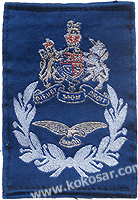
Činovi vojnika i podoficira, osim zastavnika (Warrant Officer) i glavnog člana posade (Master Aircrew) se nose na gornjem dijelu rukava službene uniforme. Zastavnik i glavni član posade svoje činove nose pri dnu rukava, iznad zgloba. |
||
 |
 |
 |
| MASTER AIRCREW | SENIOR AIRCRAFTMEN | SENIOR AIRCRAFTMEN |
| Stariji član posade | Stariji avijatičar | Stariji avijatičar |
|
|
 |
 |
| SENIOR AIRCRAFTMEN TECHNICIAN | JUNIOR TECHNICIAN | CORPORAL |
| Čin starijeg avijatičara-tehničara | Mlađi tehničar | Kaplar |
 |
 |
|
| CORPORAL | ? | |
| Kaplar | ||
|
OFFICERS RANKS OFICIRSKI ČINOVI |
||
 |
||
| SQUADRON LEADER | ||
| Vođa eskadrile | ||
ON TOP
 NA VRH
 |
||
